On thesis and its true location
Dear Void
Today was a day of
fits and starts. It’s 5pm and I’m staying on a bit to make up for having lunch
in the middle of the day with my kid and ending up visiting the Chau Chak Wing Museum. It’s still school holidays and we have to take advantage of being so
close to such a great resource right here on campus.
I’m well into JLAustin’s first lecture in How to Do Things with Words (1955/1962). If you like
your information conveyed quantitatively, then please know that I have 27.62%
(fact) of radical rewording to go. This is my method of going deep into associative
investigation of the text. A deeply pleasurable enterprise. (More pleasurable if
the writing is good. Barthes’ text is my favourite for this. Many contemporary
academic papers, not so pleasurable). It allows me the time and space to contemplate
distinctions being made by the text that I would normally skim over, and not
really retain much for use in my own writing practice. This way, as I scrutinise
the sentences, I can pick up on, say, the double sense of the word ‘state’ as
Austin plays on it in one particular part of his lecture. As a noun, to mean a
particular condition at a particular time, and as a verb ‘to express something
definitely or clearly in speech or writing.’ The verb sense dates from the mid
C17th. The noun, with its longer history, is partly a shortening of estate with
its sense of property and position and partly from the Latin status
‘state, condition’ and from stare ‘to stand.’
There’s something bodily
in this. As I’m beginning to understand it, the body is the true location of a thesis.
Let’s not, here, have a discussion about the binary of quantitative and qualitative
research paradigms and variabilities and invariabilities. And those ‘struggles’ that artist/researchers have over
locating their thesis or question. I am of the third way: performative research.
I live in/for variables. I am an imitative, interpretive, improvising, compromising
instrument. And I aim to misbehave. Wait, that last bit was from Serenity. I’m
also a plagiarising instrument. Captain Mal makes this declarative statement just before taking a final push
to get to Mr Universe with the evidence that the people on the mysterious
planet of Miranda died bc of a failed drug experiment that also (*says in loud
whisper for spoiler-y reasons*) created the Reavers Sssshhhh.
So this doubleness
of the word ‘state’, and the way these senses operate on the word ‘statement’ has,
for me, resonances with words like stead, in stead, instead, which of course
bring me to position, to place (verb) which is the etymological
foundation of thesis.
Ok. I can give no more time today to JL Austin and the measures of utterance. So that final 27.62% of the text will have to wait till tomorrow to be scrutinised!
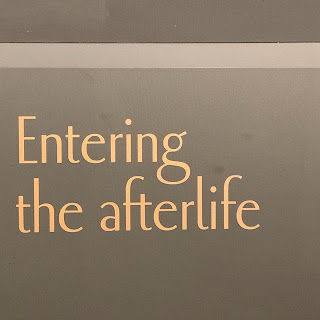 |
| A sign from the museum today :) |
Thank you to my
friends who’ve given me the thumbs up for the blog. I’m happy to get comments here below if you feel the urge to converse about research-y stuff. Remembering that
my focus is on performative research, practice-led research and how I’m going
about mine. But I'd love to hear about other people's approaches to arts research (in academia or out of it). And I hope, too, that these missives will be a sort of trail of
breadcrumbs for those starting this kind of research in the future.
Stay standing,
void.
J.

Happy birthday, Julie 😃
ReplyDelete❤️📚🎉
DeleteHahaha papers now Are awful 🦟 I need to go write an overdue essay now so will say not-gibberish.
ReplyDeleteOn language being bodily performance/acts, and postmodern jouissance...
One of the reasons I'm hesitant to invest in studying texts is that I see their effect as too-thinky and quick to pass (I laugh at Toby's extremely fun poems then I return to my life); I don't know that they are transformative (enough). Teaching how to read and write on the other hand... 👍👌👌 Don't wanna produce research, just wanna teach :p
(texts allow us to commune collectively so ok that's important and I like that a lot)